


The Only Newborn Clothing Essentials You'll Really Use in the First Month
You've got the crib. You've bookmarked seventeen different strollers. Someone at your baby shower gave you a diaper bag you're still not sure how to use. Now you're staring at a half-finished baby registry checklist wondering if you've already bought too much or somehow missed something critical.
Here's the truth: most new parents over-buy and under-plan when it comes to newborn clothing. The tiny outfit section of any baby store is genuinely dangerous for the sleep-deprived and overwhelmed. You pick up something precious, think "but what if they need this", and suddenly you have forty-two newborn onesies and nothing that actually works at 3 a.m. during a diaper blowout.
This checklist is focused specifically on the first month. Not the first year. Not the "eventually useful" category. Just what you'll actually reach for in those wild, bleary first four weeks, with some practical context on why each item earns its spot in the nursery.
 Newborn Essentials: What to Expect in the First Month
Before you bring your baby home, you should know that they eat and they poop, and they poop a lot. You're going to wrap your baby up and then need to unwrap your baby; you'll diaper your baby, and they're going to spit up on you, and then you'll start the whole process over and over again, probably all within an hour.
You may not be able to make your baby look adorable, and that's okay. What matters is that the clothes you choose let you get your baby in and out of them as quickly as possible, are breathable, and keep your baby warm. Preferably, something that doesn't require ironing.
Nursery Essentials: Picking a Safe Bassinet for Your Newborn
First, you'll need to decide where your little one will sleep; most people use a bassinet next to their bed for the first few weeks. If you decide to put your baby in a separate nursery, those early hours—say, your fourth walk down the hall at 3 a.m.—can be rough. Still, the choice is entirely yours.
Wherever your baby sleeps the first few weeks, you need to make sure it's safe. According to the American Academy of Pediatrics, that means a firm, flat surface with no loose bedding, blankets, or other items in the bed.
This is why sleep sacks and footed sleepers make it onto the essentials list! The goal here, of course, is not just to look adorable, but to keep your newborn warm.
Clothing Essentials: The Newborn Checklist You'll Actually Use
Footed Sleepers (6–8)
Sleepers with feet are great for the first month. Just one footed sleeper replaces socks, pants, a t-shirt, and an additional blanket.
Look for ones that have snaps at the bottom, or better yet, a zipper that goes all the way from the ankles to the neck. Avoid ones that only go down to the feet and require you to strip your baby down completely just to change their diaper; you most likely won't like them after a while. Kimono-style pieces open all the way down the front, so nothing has to go over your baby's head. Trust me—newborns hate that, which is exactly why front-opening styles are worth seeking out.
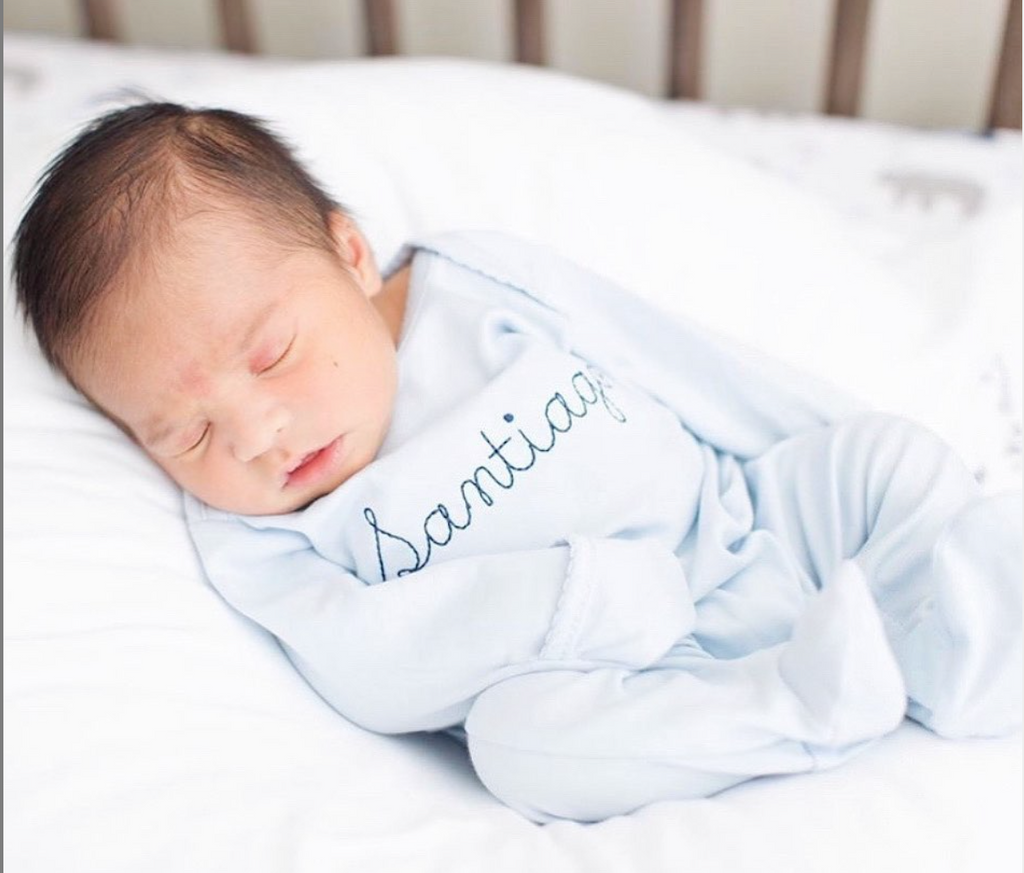
The Caprilina Ellis Kimono Footie, made from 100% Pima cotton, is a great example: soft, comfortable, easy to get on a squirming newborn, and photogenic for those first pictures. You'll also be glad you have a few once your baby quickly outgrows the newborn stage. Get 6 to 8 of them!
Onesies (8–10, short and long sleeve)
Short-sleeved onesies are great to wear under sleepers, under your baby swaddle, and on their own when your house is hot, while long-sleeved onesies will help when it's cool in the morning before you've turned the heating up.
Look for an envelope neckline. The neck on a onesie isn't just a fancy detail. It's actually meant to help you slide them off the body rather than pulling them over your baby's head after a massive diaper blowout. Most parents stumble upon this realization in the first week or so.
Swaddle Blankets (4–6)
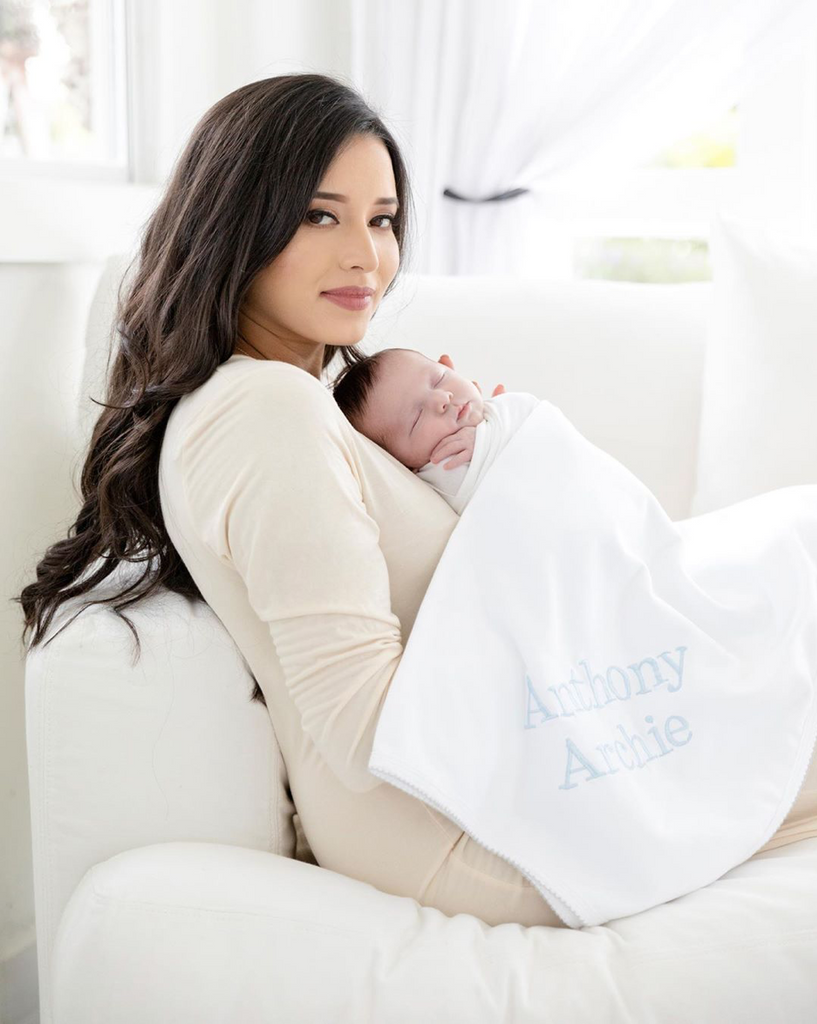
Most newborns really do calm down if you swaddle them properly, at least for a little while. Muslin blankets that stretch are great (they breathe, they wash well, and they double as nursing covers, burp cloths, and sun shades on the stroller). If you don't know how to swaddle (most people don't at first), velcro/zip swaddle bags are there for a reason.
Hats (3–4)
Babies lose a lot of heat through their heads. Chances are, the hospital will give you one to take home, but have a couple of extras on hand. Just a few simple knit caps that don't cover the eyes are all you need.
Socks and Mittens (a couple of pairs each)
Their nails grow quickly, and they can be sharp — surprisingly sharp for something so tiny. Left untrimmed, those nails can scratch a baby's face—hence the mittens, at least until you feel ready to tackle trimming with baby nail clippers. For those too scared to try the clippers, nail files are the place to start. Socks can cover their feet when they aren't in footies between diaper changes, which is pretty much constantly.
Gowns (2–3)
The sleep gown that opens from the bottom with an elasticized hem exists for a reason: midnight diaper changes. Lift the hem, change the diaper, close the hem. Nothing to get lost in your darkened room, and no zippers to wrestle with while sleep-deprived. If you can, try to keep a few in rotation at night; it will make the nights feel a lot less frantic.
Diapering Essentials: How Diapers and Clothing Work Together
Blowouts will ruin an outfit. It's not a maybe, it's a fact. Knowing what you've got for diapers will tell you how many extra outfits to pack in your diaper bag, or how much newborn clothing to bring before you figure out what's actually going on.
Newborn diapers can go up to about 10 pounds, but not every baby is a newborn size at birth. Pick up one small package to take to the hospital before you go, then see where you're at. If you buy the wrong size, your diapers will leak on one end or the other.
A good changing pad is more important than you might think. It will help you make changes quickly and avoid getting a mess on surrounding clothing. Keeping a small caddy or kit nearby for the thermometer, nose aspirator, and nail clippers keeps everything in one place and your changing station organized.
Feeding Essentials: What You Need for Baby Feeding
Whether you're breastfeeding, pumping, bottle feeding, or some mix of all three, feeding gets messy. Kimono-style outfits and gowns that open at the neck let you change your baby quickly when milk ends up where it shouldn't. Also on your feeding essentials list:
-
Burp cloths: A minimum of 8 (old cloth diapers doubled over work well if you want to be frugal).
-
Bibs: Not really necessary during the first month, but they do keep the bodysuit underneath cleaner for longer.
-
Breast pump: Most insurance plans in the U.S. will cover a breast pump if you plan to nurse or pump. Contact your insurance company to verify coverage before placing the item on your baby registry.
Don't forget to add nursing pads and nipple cream to your registry as well, as they are frequently overlooked items.
Bath Time Essentials: Newborn Bath and Post-Bath Checklist
You'll give your newborn baby a sponge bath until the umbilical cord drops off (about two weeks), after which you can use a small tub for newborn bath time. The clothing piece after a bath is immediate; it's best to have a hooded towel and a warm sleeper or footed pants set out before you start the bath process.
Babies get cold extremely quickly when wet. All of this preparation is the type of small thing that can transform a stressful situation into a very easy one.
Baby Gear Essentials: Car Seats, Carriers, and Safe Packing
An infant car seat is an absolute necessity. You have to leave the hospital with your baby in a car seat; you don't get to install it the morning or the afternoon of hospital discharge. The clothing aspect is safety-related, as snowsuits compress in a car crash and leave the straps too loose to keep your child safe. You want your little baby dressed in regular layers, and you cover them with a blanket once the car seat straps are secured, not underneath the straps.
If you plan to use a baby carrier, the same is true. Your body heat warms the carrier, so a thin one-piece works better than a heavy outfit—and a thin layer also makes it far easier to get a proper, safe fit.
Diaper Bag Essentials: A Checklist for Every Outing
Beyond diapers, here's what should be in your diaper bag for every outing during your newborn's first month of life:
-
Two full outfit changes (one-piece undershirt, sleeper or pants, hat if it's cold)
-
A few extra disposable diapers
-
Burp cloths
-
A Ziploc-style bag to contain anything that's been soaked in urine or poo
Also, keep a flat folding changing pad in your bag at all times. Some diaper bags have them built in; some don't. If you're going with a bag that doesn't come with a changing pad, don't forget to grab one.
 Choosing the Perfect Going-Home Outfit
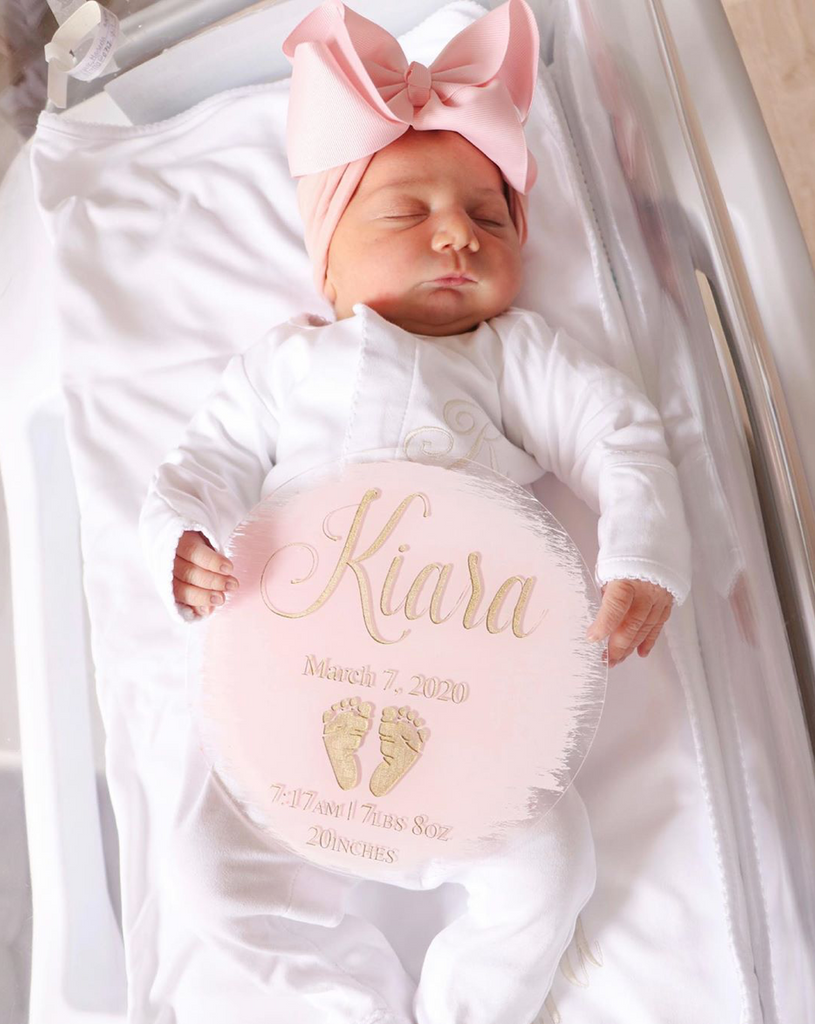
The going-home outfit is the one piece from your baby's first month that's about the moment, not just practicality. If you're building your registry checklist around what's likely to be useful later on, a personalized going-home outfit is something that should be considered separately from a stack of basic sleepers and onesies; it sits alongside other big-ticket items like the crib, stroller, and infant car seat as something memorable.
Caprilina offers custom-made newborn going-home outfits and baby clothes, including kimono footies, knitted sets, sleep gowns, hats, and bib and burp cloth sets. Caprilina's standard turnaround time is 1–2 weeks, with rush options if your baby is due any day now. For the parents who want their first home moment to look the way it should feel, it's completely sensible to have 1–2 special pieces alongside a more practical stack of everyday essentials.
If your baby's closest family and friends are looking for baby shower ideas or gifts for the new parents, a kimono footie or going-home outfit is something that will be used and remembered, as opposed to yet another generic swaddling set.
Leave a comment